MISSION STATEMENT:
The Blackfeet Tribal Historic Preservation Office strives to protect, preserve, and promote the Tribe’s history and culture. The THPO Department serves as an important point of contact for tribal members, the community, and various agencies; in this role, we are able to provide relevant, culturally appropriate information and services. We endeavor to develop projects and programs within the tribal community to incorporate traditional knowledge and values into everyday life, health, and educational outreach.
OUR VISION:
The vision of the Blackfeet THPO is shaping a secure healthy future by responsibly exercising sovereignty, investing in our people, preserving and revitalizing our Culture and Traditional ways of life while serving the best interests of all people

About THPO

The THPO department was created through a Memorandum of Agreement with the National Park Service to assume the duties of the State Historic Preservation Officer on Blackfeet tribal lands, and to engage in consultation and educational outreach throughout Blackfeet ancestral territory. NPS funds one positions annually at the THPO. The THPO department is the primary point of contact for Federal, State, and Local agencies regarding consultation and coordination to ensure the protection of cultural resources in Blackfeet ancestral territory.  We work with over 30 different agencies, plus foresters and private cultural resource management companies, on a very wide range of projects.
Some projects, to ensure the protection of cultural resources, require monitoring during ground-disturbing construction activities.  Cultural monitoring contracts are run through the Cultural Resource Department (CRD), which is under the direction of the THPO department.  The CRD occasionally secures contracts to conduct small cultural resource / archaeological surveys or collaborates on fieldwork projects with larger cultural resource management firms.
The department also directs the tribe’s Native American Graves Protection and Repatriation Act (NAGPRA) program.  We have a NAGPRA program staff and tribal consultants that collaborate on issues of mutual concern and to increase awareness and knowledge about NAGPRA.
We also proactively seek grant funding to complete special projects, focusing our efforts beyond the historic preservation of archaeological sites to include the preservation and continuation of the tribe’s rich cultural history.

In accordance with the National Historic Preservation Act (NHPA), Tribal Historic Preservation Officers (THPO) is the designated tribal preservation office of a federally recognized American Indian nation. A THPO is responsible for the administration of any or all of the functions or duties of a State’s historic preservation with respect to tribal lands of their nation.
THPO enables a tribal nation to protect and identify historic places in ways that conform to tribal values. These functions can include identifying and nominating historically significant places to the National Register of Historic Places, enforcing tribal and federal preservation laws, and preserving traditional cultural properties among other duties. Furthermore, THPOs provide the American Indian nations they work with an avenue for consulting federal and state agencies regarding impacts to historical sites. The following contacts are tribal historic preservation officers for the Amp Ska Pi Pikuni Blackfeet Tribe in Montana.

Blackfeet THPO Officers

John Murray
Tribal Historic Preservation Officer

PO Box 850
Browning, Montana 59417
Telephone: (406) 338-4271

Gheri Hall
Deputy THPO Compliance

Telephone: (406) 338-3361
Email: g.hall@blackfeetnation.com
Kendall Edmo  Deputy of Conservation & GIS
Telephone: (406) 338-3361
Mikalen Running Fisher- Archives
Telephone: (406) 338-3361
Ryan Running Crane- Chief Mountain Shield Keeper
Telephone: (406) 338-3361

THPO Professional Services

The Blackfeet Tribal Preservation Office is a specialized department within the Blackfeet Nation that provides professional consultation services in two areas:
Section 106 and Traditional Ecological Knowledge (TEK).

Section 106 refers to a specific section of the National Historic Preservation Act of 1966, which requires federal agencies to consider the effects of their proposed projects on historic properties. This includes archaeological sites, buildings, and landscapes that are considered to have historical or cultural significance. The Blackfeet Tribal Preservation Office provides consultation services to federal agencies to help them comply with Section 106 requirements, particularly when projects may impact culturally sensitive areas or sacred sites.
In addition to Section 106 consultation, the Blackfeet Tribal Preservation Office offers expertise in Traditional Ecological Knowledge (TEK). TEK refers to the knowledge and practices developed by Indigenous communities over centuries of living closely with the natural environment. This knowledge encompasses a range of practices related to hunting, fishing, agriculture, and land management, among other areas.

The Blackfeet Tribal Preservation Office’s TEK consultation services provide an opportunity for federal agencies and other organizations to learn from the Blackfeet Nation’s cultural and ecological knowledge. This consultation can help to ensure that proposed projects are designed in a way that respects and incorporates Indigenous knowledge and practices, ultimately leading to more sustainable and culturally sensitive outcomes. Overall, the Blackfeet Tribal Preservation Office’s professional consultation services in Section 106 and TEK play a crucial role in supporting the Blackfeet Nation’s cultural and environmental preservation efforts, as well as promoting a greater understanding and appreciation of Indigenous knowledge and practices.

Section 106 Consultation


The Blackfeet Tribal Historic Preservation Office (THPO) provides the following information to assist federal agency officials and others working with tribal governments located in the Blackfeet Nation. It is the federal agency’s responsibility to identify and consult with the appropriate tribal governments pursuant to Section 106 of the National Historic Preservation Act (NHPA) early in the planning of federal undertakings. Contact information for each tribe, for the Tribal Historic Preservation Officers (THPOs) who have assumed SHPO duties pursuant to Section 101(d)(2) of the NHPA, for the Advisory Council on Historic Preservation (ACHP), and for the National Park Service (NPS) Tribal Preservation Program are listed below.

Section 106 of the National Historic Preservation Act stipulates that federal agencies must consider the effects of their undertakings on properties listed in or eligible for the National Register of Historic Places. The Tribal Historic Preservation Office (THPO) has an important role in this process and consults with Blackfeet tribal elders under the program. The THPO assists federal agencies or their recipients of funding, license, or permits in determining if significant archeological or historic resources are located within the project area and, if so, whether the undertaking will impact those properties. Depending on the situation, the THPO helps the agency to develop appropriate mitigation of any adverse effects on these valuable resources.

Traditional Ecological Knowledge Consultation

Traditional Ecological Knowledge (TEK), also called by other names including Indigenous Knowledge or Native Science, refers to the evolving knowledge acquired by indigenous and local peoples over hundreds or thousands of years through direct contact with the environment. This knowledge is specific to a location and includes the relationships between plants, animals, natural phenomena, landscapes, and timing of events that are used for lifeways, including but not limited to hunting, fishing, trapping, agriculture, and forestry.

Traditional Ecological Knowledge (TEK) is the ongoing accumulation of knowledge, practice, and belief about relationships between living beings in a specific ecosystem that is acquired by indigenous people over hundreds or thousands of years through direct contact with the environment, handed down through generations, and used for life-sustaining ways. This knowledge includes the relationships between people, plants, animals, natural phenomena, landscapes, and timing of events for activities such as hunting, fishing, trapping, agriculture, and forestry. It encompasses the worldview of a people, which includes ecology, spirituality, human and animal relationships, and more.
TEK is also called other names, such as Indigenous Knowledge, and Native Science. Indigenous peoples as well as non-Indigenous peoples who are long-term (hundreds of years) local residents, e.g., Appalachian communities, and Spanish land grant communities, can also provide TEK.
TEK is different from user knowledge and local knowledge. User knowledge is one person’s experience over a lifetime or less. Local knowledge is more than one person’s experience aggregated, showing a trajectory, but not yet time tested. Individual users sharing knowledge with other local users and elders, and then time-testing this new knowledge is part of the evaluation and validation process for TEK.

THPO Projects 2026


1. Buffalo Bull Lodge:
The Blackfeet Tribe had seen a unmet need for the Blackfeet THPO, once housed in one of the oldest buildings on the reservation funding arose to construct a cultural center that meets the needs of our department. Not only does our office protect our culture and way of life, we highly promote it as well. The Buffalo Bull Lodge will provide space to the local ceremonialist to conduct their ceremonies, once complete we will have a grand opening for the public to view.
2. Two Medicine Road:
The Federal Highway Administration is reconstructing the existing roadway. 4.3 miles of this project lies within the Blackfeet reservation boundaries. Starting at junction 49 near Red Eagle Campground, continuing 4.3 miles to the Glacier National Park boundaries. A Cultural resource inventory has been completed and construction will begin the summer of 2026.
3. St Mary Canal Project:
St Mary canal diversion works- Dam replacement and fish modification project. The Bureau of Reclamation is proposing to replace the St Mary Diversion Dam, a site that is eligible for inclusion in the National Register of Historic Places. The dam has been in operation for over 100 years with only minor improvements, a complete replacement of the dam and headworks is needed to provide fish passage for the west cut Bull Trout which is an endangered species.
4.High Altitude Cultural surveys:
The Blackfeet Tribal Historic Preservation Office (THPO) is conducting high-altitude cultural surveys on and off the Blackfeet Reservation to document Blackfeet presence across our homelands and strengthen the historical record of our long-standing relationship to these lands. Through this effort, the THPO has recorded 491 new cultural sites, demonstrating the depth and continuity of Blackfeet use and occupation in high-elevation areas that have often been overlooked in past research.

This project is the first of its kind for the Blackfeet THPO, and it represents an important step forward in protecting and preserving cultural resources across our ancestral territory. The Blackfeet THPO will continue expanding high-altitude survey work in the coming seasons to ensure these places are identified, documented, and respected for future generations.

5. Digitization Project:
Digitization of paper records is taking place. We have received a small grant that allowed the office to digitize some of the paper records. We will be updating the web page with the records we have uploaded and hope to share with the public census records, old historic photos, Blackfoot history. We encourage the public to help us name any of the unnamed photographs or any historical knowledge.
6. Siyeh fiber Optic:
Siyeh and THPO will be continuing working on the installation of Fiber optic lines in the Browning areas. Summer of 2023 THPO and Siyeh conducted the Class III Archaeological survey of Flat Iron, Star School and Heart Butte (Badger Creek Rd). Surveys conducted will clear the route for the new fiber optic lines to be installed. During all ground disturbing activities a Tribal Cultural Specialist TCS will be on site inspecting for any below surface discoveries.
7. Forestry Project:
Forestry will be clearing Timber sales in Cut Bank Creek and Boulder Ridge area. A Survey of the Cut Bank Creek drainage has ben complete and awaiting a NEPA compliance.
8. Blackfeet Home Site Survey:
During Fiscal Year 2025, the Blackfeet Tribal Historic Preservation Office (THPO) continued to fulfill its responsibilities under the THPO Agreement to direct and conduct comprehensive surveys of historic and cultural properties on tribal lands and to maintain and expand the tribal inventory of such properties. This work was completed in cooperation with federal and state agencies, tribal departments, local governments, and private organizations, ensuring compliance with applicable cultural resource protection laws while supporting infrastructure development and community needs.
Residential, Utility, and Infrastructure Surveys
Blackfeet THPO conducted extensive pedestrian and compliance surveys related to residential development and infrastructure improvements across the Blackfeet Reservation. This included surveys of 52 individual home sites, each consisting of 2.5 acres, for a total of 130 acres surveyed to support housing development for tribal members
.
9. Chief Mountain Guardianship/ Shield Keeper:
3 Part-Time Positions have being created that will preserve and protect areas on Chief Mountain thanks to a NFWF grant. In 2024 the THPO had to enforce 2 tribal resolutions from the 1980’s that prohibited the use of Chief Mountain to any activities other than Cultural use. The mountain itself is open to all Blackfeet member and Descendants wishing to conduct a cultural visitation to the mountain. Signs will be posted this Spring alerting the closure of the area directly to the mountain and various motorized vehicles paths. This closure does not effect any hunting or big game tags issued.
10.Ethnobotanical and Traditional Knowledge Surveys :
THPO conducted a Chief Mountain Unit flora and fauna survey, identifying 36 species of traditionally significant plant life. Of these, 25 species were approved for collection and preservation for future educational, cultural, and interpretive purposes, strengthening the documentation and transmission of traditional ecological knowledge.
.

Off Reservation THPO Projects

1. Northern Plains Connector Project:
TRC Environmental Corporation (TRC) began conducting a cultural resources inventory for the Grid United North Plains Connector Project on October 12, 2022. The proposed 500 kV transmission line and associated access roads and infrastructure is to begin just west of Bismarck, North Dakota, and extend westward through Morton, Grant, Hettinger, Slope, and Golden Valley counties in North Dakota, and Fallon, Custer, and Rosebud counties in southeast Montana. Fieldwork included a baseline inventory of Class III cultural resources survey and limited shovel testing. All surveys were conducted by foot, dependent on field conditions, and access was by paved and dirt access roads.
2. Sentinel Project :
Blackfeet THPO continued a cultural resource study alongside Tribal partners. Surveys will begin the Spring of 2026.
3. Ancestral Land:
The Blackfeet Tribal Historic Preservation Office (THPO) will continue to assert and pursue the Blackfeet Nation’s ancestral interests on projects located off the reservation that require compliance with Section 106 of the National Historic Preservation Act. Reservation boundaries do not define or limit Blackfeet history, cultural affiliation, or traditional use of the land. Blackfeet ancestral homelands extend well beyond present-day borders, and these areas remain culturally, historically, and spiritually significant to the Blackfeet People.

Accordingly, the Blackfeet THPO will seek meaningful consultation on undertakings within our ancestral territory to ensure that Blackfeet cultural resources, traditional knowledge, and sacred landscapes are properly identified, considered, and protected as part of the federal decision-making process. The Blackfeet THPO remains committed to engaging in good-faith, government-to-government consultation and will continue advocating for the recognition of Blackfeet presence and stewardship responsibilities wherever federal actions may affect our ancestral lands.

News From Around North America

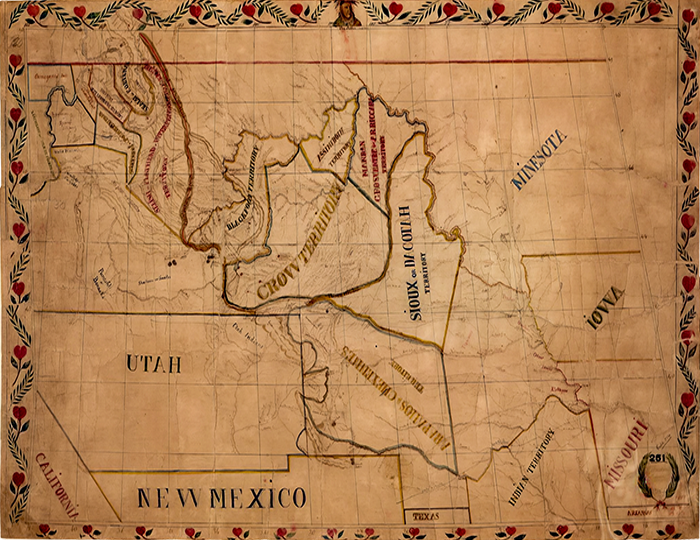
Map
The Blackfeet Tribal Historic Preservation Office (THPO) expresses deep concern about the various initiatives and actions that impact the First Nations Tribes of North America. As an organization committed to preserving the cultural heritage and traditions of the Blackfeet Nation and other indigenous peoples, the THPO closely monitors news and events from across the country and the world.
The Blackfeet THPO recognizes that many challenges and issues face all First Nations Tribes, ranging from cultural appropriation and environmental degradation to discrimination and lack of representation in government. Thus, we use this platform to highlight news and events that are relevant to these efforts, as well as share information and resources that can help raise awareness and promote positive change. We are committed to keeping our community informed and engaged in issues that affect their lives and futures. This approach reflects our mission to empower indigenous communities and preserve their cultural heritage and sovereignty for future generations.

Chief Mountain Resolution


The Blackfeet THPO Office shall regulate access to the Chief Mountain to protect and preserve the cultural, spiritual, and ecological integrity of the area. Ninastako has served as a sacred landscape for the Blackfoot people for thousands of years and is the origin of the Thunder Medicine Pipe. The Chief Mountain area is a critical ecological system home to traditional flora and fauna including many keystone species including west throat cutthroat trout, grizzly bear, and bison. It is paramount that access to this area is regulated to preserve the ecological and cultural heritage for future generations.

Per tribal resolutions, 219-82 and 219-92, close the 1-mile radius surrounding the base of Chief Mountain and permit ceremonial and religious activities.

Permits

Any person/entity wishing to access (Zone 1 and Zone 2) must obtain a permit from the Blackfeet THPO Office. During hunting season, large groups will be limited in this area for safety concerns and to minimize ecological and habitat degradation.

ZONE 1. Chief Mountain and 1-mile radius

The following groups/activities are permitted access to Chief Mountain Peak and within the 1- mile radius:
1) Traditional Blackfoot ceremonial practitioners and knowledge keepers (tribal members and descendants).
2) Other Indigenous traditional, ceremonial, and practitioners
1) Authorized personnel of the Blackfeet Tribe including THPO staff, Shield Keepers, Blackfeet Fish and Wildlife, etc.
3) Community education groups that directly benefit the Blackfoot people
4) Hunters and Outfitters following the BFW Code of Regulations
5) Academic and ethnohistoric researchers approved by the Blackfeet THPO Office

ZONE 2. Chief Mountain Unit: Hunting, Fishing, Gathering, Outfitting and Guiding

The following groups and activities are permitted in Zone 2:
1. Authorized personnel of the Blackfeet Tribe including THPO staff, Shield Keepers, Blackfeet Fish and Wildlife
2. Academic, scientific, and ethnohistoric researchers approved by the Blackfeet THPO Office and BFW
3. Tribal members and descendants are allowed to hunt per BFW Code
4. Non-Indians guided by an approved Blackfeet Outfitter or guide per the BFW Code of Regulations
5. Blackfeet tribal members and descendants – recreational activities including but not limited to hiking, camping, horseback riding, etc.

Activities Not Permitted in the Chief Mountain Area’s Zone 1 and Zone 2

1) Use of motorized vehicles; unless authorized by BFW and Blackfeet THPO
2) Non-Indians – recreational activities including mountain biking, camping, use of ATVs, and horseback riding (Unless with a licensed guide under the BFW Code of Regulations)
3) Outfitters and guides are not permitted to show non-Indians trailheads to access the peak of Chief Mountain.

error: Content is protected !!